Whitewater River Rafting and Adventure Research blog at Triad River Tours. An inquiry into the state and nature of the river running industry and a guide to vacations and mountain adventures with professional guides.

Rafts Manufactured in China and Korea
Rising popularity of PVC rafts manufactured in Korea and China and sold to American rafters.
Rafts are made in Asia? ... Any good?
We just had our annual meeting with our primary whitewater rafting gear supplier, Northwest River Supplies. A few things were different when we walked in the door this time… and of course a lot of things were the same. The new paddles, helmet designs, increased attention to detail and of course continuing to improve their supply chain to bring great gear to outfitters and private boaters alike. But right in the middle of their showroom was a Star Inflatable raft. Kicking it a couple of times and asking the clerk at the front desk “what’s this doing here”…. She replied “we just purchased Star Inflatables”. Well, that’s interesting.
Over the last 15-20 years the whitewater raft industry has gone through some major metamorphosis. I’ll keep this brief and focused more on the professional side of things, but here’s the just of it. Before the 1990s pretty much all rafts were made of rubber, simple, rubber. Sure, you can call it something fancy like “Pennell Orca”, “Hypalon”, or what have you, but these are rubber compounds just like tires on a car. In fact, back in the day some of the best rafts were manufactured by the same companies that manufactured tires. Anyway, moving on… what’s the significance here? Rubber was kind of expensive, and even though it made great rafts, it’s kind of a one trick pony when it comes to raft design. The old Riken designs were Hypalon/rubber and were very innovative in their day. Most raft designs, in terms of tube diameter, shape, width, and so forth, are much the same now as they have been for many years. The cutting edge designs that were game changers; The Riken diminishing tube design used on the infamous Nez Perce, Cheyenne, and other designs, have been copied repeatedly and to be honest, seldom have they really been improved upon. The Aire “D Series” rafts are essentially a uniquely manufactured diminishing tube design that had it’s origin back in the old Riken days. To be clear, back in their day, Riken boats were highly innovative compared to what was out there, and the designs are still manufactured, now by Northwest River Supply using the Pennell Orca material (which is still very similar to Hypalon/Rubber/et. al).
In the 1990s a company out of Idaho came along and really changed the game, and they continue to be the standard for private boaters in the Western United States as well as in other places. Aire came out with several innovative raft designs that not only fit their production system, but also gave better performance than anything out there. The “Puma” series, with the original Puma (around 11 feet long) and the Super Puma (around 13 feet long) gave paddlers a boat that could slice down rivers like the Upper Yough, and technical water, with more style. To this day these two designs are the industry standard for steep technical paddling. You can see that the most serious rafting is often done in Aire boats because of the advantage afforded them by the ballast floor, which in some cases does prevent flipping. If you don’t believe us please just google “Dan McCain” and watch some of those descents R2ing an Aire 130E (A design very similar to the Super Puma, albeit slightly wider). The point here is that Aire came around and brought a new way to manufacture rafts, which forced them to come up with new ways to design boats. The Aire factory, located in Boise, Idaho, is a benchmark for new raft design. They focus highly on customer satisfaction and a great warranty service. Their rafts, with a unique urethane bladder, which is held at pressure, and is then contained within a PVC shell, gives the rafts the ability to sustain a puncture and be repaired easily in the field, or, better yet, their rafts can often be gashed on the outer PVC shell and the internal urethane bladder remains in tact. What’s the catch? Are they expensive? Actually no. Are they heavy? Well, not exactly. An Aire raft off the showroom floor isn’t any heavier than a comparable Maravia, NRS, Hyside, or other manufacturer, and if so it’s only a slight difference. The thing that makes their designs disadvantageous is that the ballast floor fills up with water, and is difficult to lift in and out of the river. This causes issue for people packing in, or outfitters that want to stack their boats 5 or 6 rafts high, and maintain an efficient operation. Further, the Aire PVC shell is sewed… That’s right! The things are literally sewn on sewing machines. There is even a non waterproof zipper that you can see clearly on their rafts, Inflatable kayaks, and catarafts. So do they absorb a lot of water? No, but it’s enough to make a difference, and it also means that through the course of the season you will be watching those stitches occasionally push water out, which is not only distracting but causes one to naturally consider just how much water and river sediment gets inside those zippers. Truth be told we really don’t know because at Triad River Tours we have never opened one up (perhaps a testament to the durability of the design; we’ve just never had an issue).

Triad Guide Blake Henderson demonstrates just how durable an Aire Tributary raft is while running Boulder Drop on the Skykomish River during the low water of the drought riddled 2015 season.
Since the Aire design came out there really has not been, in our view, an innovation in raft design that has really changed the game as much since then, aside from the tremendous influx of inexpensive PVC rafts, particularly those manufactured in Asia. Back in the old days, you had Star and a few others that were using an exclusively PVC raft design (keep in mind that Aire uses a Urethane mixed with PVC). Around 2000 (almost 20 years ago at the time of this writing) we started to see these Korean and Chinese raft manufacturers showing up at the boat and sportsman shows. Saturn, Maxxon, and a few others came on the scene at an incredibly attainable price point. Private boaters rejoiced en masse. No longer were private rafters needing to shell out outfitter money, and a huge market began and has continued to this day. These rafts were coming in at $1500 in USD money back in 2000, and even today you can find some of these rafts in 14’ (a common Pacific Northwest size) for around $2500. This is an incredible change in the market, and many outfitters abandoned their “Buy American” roots and opted for the cheaper rafts. Even still, American manufacturers like Rocky Mountain Rafts, a USA raft manufacturer, uses foreign manufacturing on American designs using PVC. The world has indeed changed.
The design of the PVC boats manufactured overseas are almost always carbon copies of simple Hypalon raft designs which have been around for decades, and they almost always feature round tube (non diminishing tube) designs. The boats are tough and heavy, as it comes with PVC, and are made of a durable, albeit less fancy version of PVC used by Aire (Ferrari PVC). The Asian manufactured designs have completely rooted out any domestic competition in the lower end private boater raft market. Aire, being the steady handed company they are, and knowing full well that their products serve a mix of outfitter and private boaters, they noticed right away that something was going to have to be done, and they made a move with their Tributary line. If there was no pressure from foreign raft manufacturers it would have been ridiculous for them to offer two raft lineups, competing for the same customer. But in a market now cramped with low end rafts, they had to do something, and they did… and they did it with style. The Tributary boats initially offered the exact same (essentially) construction as their outfitter series (E, D, R), but were manufactured overseas to save costs, were only available in one color, and had a few bells and whistles removed, per the norm. The Tributary became an instant classic. 14’ Tributary boats initially offered had a retail price point below $2000, and outfitter pricing offered tremendous opportunity for small developing rafting companies to get a pretty solid fleet put together for a third the cost of the major brands (Aire, Hyside, Maravia, Sotar, NRS, et. al). Tributary boats were game changers.
At Triad River Tours, where we innovate and try to always be leading the pack, we decided to follow the crowd and have owned a few of these Tributary boats and think they’re great for their intended purpose. They run slightly more sloppy (think; more flex) than the standard Aire boats. The Tributary boats also have a newer PVC which we feel is inferior to the Ferrari material; we assume this must just be a slightly cheaper and slightly less durable material. Nonetheless, where the market is crowded, and you want to try and buy American, one has to consider it better to buy a foreign manufactured raft from a domestic company than going full import… Right?
The progression of rafts has left us in an ocean of possibilities, where the price of the higher end companies like Sotar and Maravia have not risen in price in many years. At the same time companies like Aire with their Tributary line, and newcomers such as Saturn and Rocky Mountain Raft, are competing with each other to the ultimate end of helping the customer (more often than not the private rafter) find a capable whitewater river raft at a decent price. Things are looking good all around. As far as selection? It’s personal preference at this point. The companies that have been making rafts and selling them in the American market for the past decade or more have all been tested on a variety of rivers. Obviously, the more multi-day whitewater rafting you do the more you will want to consider the higher end boats, as nothing screams “bad decision” more than patching a raft half way down your once-in-a-lifetime Grand Canyon trip. Take that into consideration; the old adage “you get what you pay for” has practical application here and elsewhere. Manufacturing rafts overseas is no longer the death sentence it once was. It’s cheaper, and they’re using the same techniques employed here in the states. The world has changed, indeed, and has brought our own raft designs overseas and back to our own shores, from decades of innovation, rafting outfitter and private rafter feedback, many dinners and conversations between outfitters and manufacturers like we just had with NRS, and we’re at a place where things have stabilized and there are no longer many secrets. Everyone that manufactures whitewater rafts seems to know how to do it fairly well… it may come down to who has the most charming salesperson, who has the best warranty, and maybe who has the most exciting Facebook videos.
Until next time friends, remember that you’re always in between swims, take every precaution, and respect mother river for all the lessons she gives us. Take good care and always look downstream (Maravia slogan!).
Read more:

Winter River Scouting
Analyzing winter conditions in the Cascade Mountains to analyze whitewater rivers.
Scouting Rivers in Winter
During the winter, while we enjoy spending time in the mountains skiing and other recreational endeavors just like many of our guests, we always keep an eye on the season that is always approaching, and take into account that winter mountain conditions are the biggest indicator of summer whitewater river rafting conditions to come. Our guides are often seen scouting rivers in December and January; it seems that most passersby that see them at the river are shocked that we would be out when it's so cold, but in our view the only way to really get to know the river is to see it during all of it's phases of seasonality.
Our system at Triad River Tours regarding river research is one that acknowledges the seasonality of nature, and thus the dynamism and changeability of our river systems. As a result of continual change in the rivers, we advocate for our guides to spend as much time as possible on one particular river. In the same line of thinking we want our newer, less experienced guides, to spend their entire first season guiding on the same river; that is to say that we want them to be exposed to all of our river systems in a training capacity, but as far as professional guiding we believe it best to take a step by step approach.

Many of our guides prefer this time to continually foster their relationship with the river, its rapids, and changing conditions.
During winter the rivers are cold, often choked with ice, and at times impassable. This isn’t a time that is safe for our guests, but many of our guides prefer this time to continually foster their relationship with the river, its rapids, and changing conditions. The summer is a time of exuberance on the river, and while the winter is more subdued, it really is when the river is resting and preparing for another wild and rambunctious display of whitewater during the summer. We believe that because rivers are adaptable, and change with the seasons, that if we are to understand the river entirely and be able to accurately describe it’s features, that we need to develop a relationship with it outside of our busy summer season.
The coastal rivers of Washington are more dynamic, technical, and changeable than most whitewater rivers in the USA. The guides in Washington are thus required to have an added sense of awareness relevant to such changing rivers. Our rivers were formed from volcanic activity, some of which has altered the rivers significantly during the past hundred years. Volcanos like Mount Rainier, Mount Baker, and Glacier Peak, have all been influential in the development of our coastal rivers. Glacier Peak, for example, is over 10,000 feet high, and while it is one of the more hidden Cascade mountains as far as views, it is one of the more active as far as river systems. Within the last 1000 years the Sauk and Suiattle Rivers have changed entirely as a result of volcanic activity from Glacier Peak.
Higher elevation snowfall is another factor in summer whitewater river rafting quality. While we aren’t always aware of it while the sun is shining, the water below us was once ice just a few months earlier. Mountain passes and peaks get packed full of snow, and during the winter months some of our staff prefer to travel on these peaks, skiing, snowshoeing, and backpacking on the frozen water that they will be running in rafts in months to come. This kind of activity is not only encouraged at Triad River Tours, it’s a part of our hiring process; we are always looking to hire more guides from the rescue/medical/outdoor recreation industry. Rather than have a guide who works only in the summer and is separated from nature for much of the rest of the year, our guides are often the ones seen at trailheads in the fall, winter, and spring. Because developing relationships with nature, and sharing our relationships with the rivers we run with our guests is our business, it’s invaluable to invest our time in learning more and having experiences with our rivers and wild natural lands.
In the video below, Triad River Tours tests Boulder Drop of the Skykomish River during winter. River levels of the fall rainy season typically emulate early spring, while winter conditions bring river levels that are often similar to late summer. Utilizing these seasonal changes gives our guides staff an opportunity to train and analyze river routes and protocol/rescue procedures without the concern of guest safety; a prime time for us to improve our whitewater rescue systems, and have candid discussions among guides about the best possible routes through rapids, without added distraction.

Predicting Whitewater
Predicting river conditions on commercial whitewater rafting trips.
Each year we spend a lot of time developing our communication with our guests in regards to how to explain the conditions. The most truthful answer to the question “so how will the river be looking that day?” is an almost cheeky sounding “we have absolutely no idea”. The even more honest retort would be “we have no idea, the government has no idea, and all we do is watch the weather and river flow predictions to go to the river and find out that they are incorrect most of the time”. That’s the truth of it….
It’s not all bad news though. The unpredictability of nature is one of its greatest allures and no doubt one of the most distinct contrasts from a day spent in the city at work or otherwise in the world of synthetic design. Nature has a plan that seems to escape our ability to understand it… a place where instead of being the master we are constantly designated the student. Instead of enforcing our will upon it, we must surrender to it while controlling only the course which we will take, in order to proceed safely by the good graces of our old friend the river, allowing us passage so long as our previous experience and knowledge of her is being showcased.
In 2015 the snowpack reports out of Seattle (Puget Sound area on the SNOTEL map) showed 4% snowpack at the start of the season. In 2017 it showed over 100% at the same time… still, having 25 times more snow didn’t give us 25 times the whitewater. Nature is tricky, and our hydrographs, advanced weather forecasting, and (for us) listening to old river guides and reading farmers almanacs are only going to tell us so much. At the end of the day we have to be ready to adapt… and in reality, that’s our job as professional river guides; we are students of nature, and we are the leaders of expeditions, which improvise tactics in order to find success and safety by the end.

Nature has a plan that seems to escape our ability to understand it… a place where instead of being the master we are constantly designated the student.
It’s an analogy, for us at least, that can be equated to the Zen phrase of “living in the moment”. We recognize fully that it is in the best interests of our profession, our company, and our whitewater rafting clientele, if we try our best to predict the conditions on a certain day. Failure to do so to the best of our ability could result in someone running a river at a high flow when they are only beginners, or someone looking for a rough ride ending up with a river as low as a trickle. We try our best, but it’s tough to make guarantees. What we have found through experience is that the best way to prepare is to be ready for anything, and to make our systems malleable by our people. Our professional whitewater river guides are just that; guides. They are there to guide an expedition down a river and see what happens next. That’s what separates nature from a trip to a theme park or the movie theatre. It’s unpredictable, completely spontaneous, and at any given moment, on any day, it can provide you with something unexpected, or for a veteran guide of even 20 or more years, something they have never seen before; even on a river they have ran hundreds of times.
Rivers are the exemplification of the laws of nature; they flow to the lowest points and they abide completely and totally by the principles and laws that define their structure. A river is made of water, rocks, trees, plants, moss, fish, et al. The dynamism of this system is something that’s so beyond our human ability to comprehend that simply being surrounded by it (or perhaps swimming literally in it) puts someone into a state of mind reminiscent of being a child. We recognize our limits almost immediately and intuitively… we can see so clearly that we are not the power…with all of our technology, our intellect, education, money, and experience, we are here at the rivers edge, once again, like a child; watching, wondering, absorbed in our own sense of awe at just how immediately vulnerable we are once we begin our descent of the rivers current. Rivers provide us a gateway to this unmistakable truth; that there is always more to life than it appears.
Whitewater obeys the same laws, like clockwork, every time. It is perfectly efficient in it’s own way; following the course through canyons carved for the river itself, it does exactly as it is supposed to do every day. It is predictable only in that it will always provide you with a window into the truth. Even the most arrogant river guide would never look back on an incident on the river and say “the river decided to all of a sudden change”… for we know that if we make a mistake on the river it is always ourselves that are the cause. Perhaps that removal of agency is something else we need in order to be truly honest with ourselves. As we like to say on the river “you’re always in between swims”, generally that means that as long as you’re running whitewater, you’re going to eventually end up out of your raft or kayak. The same thing could be said another way; as long as we are human, the river will have something to teach us. And each year, the river, it’s simple, non-authoritarian way, brings us closer to what we truly are; students… all equally attempting the same thing. On the river there is no one who is exempt from it’s laws… sure, our guides may know the path, they may know their relationship with the river, and our equipment may be proven, but when we are on the river we are always equals. On the river we are all just people.
Read more:
Why You Should Abandon Seattle for the River This Weekend
Risk, Whitewater Safety and Wilderness Medicine: Why Professionalism Matters on the River

Rookie River Guides
What is a fair river guide wage, and what medical and swiftwater rescue training should be required of river guides.

When Triad River Tours started operations in 2012 one of the key principles that we decided were going to drive the company and its mission was that we were going to pay guides well, and not hire anyone who came along. This became a huge challenge when we started competing in a market where other companies were offering guide trainings, primarily seeking to attract college age customers, and charging around $500 for them to learn how to become raft guides. The premise of this makes perfect sense; the 50 hour required minimum set forth in the Washington State legislature outlines that the course have certain aspects related to public safety. These courses are going to cost money, and it’s natural that these costs be shared with the guides and not be the sole responsibility of the company. The issue arises when these guides are given preference before the veterans. Let me explain.
While managing another rafting company in Washington, one of our river managers got an angry call from a veteran river guide of 20 years. This man explained that he wasn’t going to pay to go to a guide training “put on by some college kid that has less experience than I did when I was a teenager”. The point was well received. The issue in Washington was one of supply an demand. It makes more sense economically for a rafting company to rely on the younger guides for several reasons. First, they are making money on them. If you keep your veteran guides, you have to be honest with the new recruits and let them know that the most prestigious positions at your rafting company are already taken. Second, the new “rookie” guides will absolutely work for less money; they are “bright eyed and bushy tailed” and are ready and willing to sacrifice their labor to the brink of exploitation in order to make it as a first year river guide. And who wouldn’t? Maybe a person has no intention of making the outdoor industry their career. Wouldn’t it make sense for them to apply to a company where they will get more work, and then later in life they can tell their grandchildren about “back in the day when I was a river guide”… well that’s the narrative, anyway. Third, and perhaps most devastating, is the fact that by the time a guide moves beyond that initial phase of being enthralled in just being able to be called a river guide, they’re more valuable, not just to a rafting company, but to the world… at this point they are going to want to be paid more, and that’s where the conflicts will start with their rafting company. The end result is that the veterans are disposed of in order to make way for the younger, less experienced, more willing, cheaper labor of the rookie guides, and as a result the quality and professionalism of the industry is lessened as the best river guides are sent to pasture while the less knowledgeable take the reins not only of the safety of the public, but the image and legacy of river rafting on the rivers that they run. A lot of times, some really useful knowledge that was gained through the experience of these older river guides is lost, because the companies don’t keep good enough research. For example; a raft accident occurs and through the experience the guide learns a great lesson… this is an opportunity to protect public safety and pass this information and learning to future generations of river guides, but it simply doesn’t always happen.

Here, our river guide, Danica, takes rafters down the Skagit River. She has been rafting for six years, and guiding for three.
In a lot of rafting industries and markets, there is a lower than average (across multiple service industries) profit margin. Couple that with pressures related to ever arching liability insurance costs, government user fees, and fuel costs, and it’s pretty difficult to run a business in the rafting industry where your employees are paid fairly. This isn’t even to mention the likelihood that the person operating a rafting company probably got into the industry because they like the lifestyle; not necessarily because they were the sharpest businessperson. And thus, the saga continues where experienced river guides find it hard to sustain their lifestyle as river guides, even though they have a great deal of experience to ad.
So what did we do? We bit the bullet. We took the average profit margin in the rafting industry (around 30%) and accepted a lower one (20%). We also did something really strange… we decidedly made the trips cheaper, further lowering the margin, but guaranteeing more work (full boats mean guides are working more often). The result was a system that was sustainable for “career guides,” even though it may not have been the most profitable. Thus, Triad could be considered 50% for profit and 50% river guide co-operative. Everyone pitches in ideas and shares what they know, and they are compensated for every minute that they work. We also eliminated after trip work hours, where most companies have their guides working into the evening washing wetsuits, patching boats, and vacuuming out vans; we decided to pay an hourly wage to anyone doing work after hours. We also hire out our guides to other companies on days where we don’t have enough work for them (as long as the other raft trip outfitter does business in an ethical way). The result is that the guides are supported by the company and the company by the guides, and in the long run we have very low turnover, which creates less stress on management, and a smoother operation, with (in theory) happier guests who can tell the difference between our way, and the way of our competitors. The theory is that in the long run this will benefit the company by having a higher rate of return clientele, resulting in a higher customer lifetime value, as people will be wise to our system and realize that we go the extra mile.
We are currently working on a curriculum for guide training, in partnership with the Swiftwater Safety Institute, where rookie guides are required to not only pass a legitimate and well rounded guide training curriculum which meets or exceeds the Washington RCW, but also requires them to get advanced medical certifications and a Swiftwater Rescue Training certificate before they’re paid on the higher tiers. The result is that there is a little bit of hierarchy; we do realize that some college age guides don’t have the time and money for these things, so we have also added tuition waivers and work/trade internships that are part of a learning portfolio for these rookie river guides, so that we can ultimately get the finest applicants with the most presence and drive, and not simply the ones who have the disposable cash to do all of the trainings. It can be a bit of a tight fit to make it all happen, but we keep communicating with the guides to make sure that they can meet these requirements while also not just giving up to work for Joe Blow rafting company across the street who will put them to work the day after finishing their guide training. We hope that in the long run our theories hold true, and that we continue to have a stunningly professional and competent guide staff. We believe that the only ethical commitment our company should have that is more important than that of our employees security and fair treatment, is that of public safety. At the end of the day public safety has to be the driving force of any legitimate whitewater river rafting company. We realize this, and also realize that once in a while we just have to move on from a river guide that doesn’t have the drive, passion, or even the raw physical ability. It’s not a fun job to have, as a river manager, but if we keep our ideals and mission close at hand and in our minds eye, we believe that in the long run things will work out, and those who have the true desire to be great river guides will make the sacrifices and endure the long days of training, the cold, the fear, and the exhausting research required of them to also have the ability to keep the safety of the public as not only a priority, but as a daily and primary accomplishment.
Read more:
Snowpack Report
Analysis of the 2017 Snowpack levels as they relate to Washington State whitewater river rafting

The rafting industry flourishes and fades with the seasonal flow of the rivers, from the high water of spring to the rocky late-summer lows; and the flow of the rivers, in turn, depends on mountain snowpack.
The Pacific northwest had a great snow year this winter, with snowpacks across Washington state averaging almost 20% above normal. The spring melt came on time and not too hot, leaving plenty of snow in the mountains to melt out later in the year and boost summer river flows. This was a great change from last year, when snowpack levels across the northwest were far below normal or even completely melted out by May. A lot of this early snowpack loss was due to an unusually warm April, which melted most or all of the accumulated winter snowpack in many areas months ahead of the usual melt season. This depleted snowpack led to low river levels even early in the summer and a much shorter rafting season on most whitewater rivers.
In years with low snow or an early melt, streamflow is lower and fades earlier in the season. Many of the most popular whitewater rivers can’t be run at all at low flows, and those that can be run in a dry year become crowded as every rafting company moves their trips to the runnable rivers. This results in less business for every company, since they can’t run as many trips, and that in turn trickles down to individual guides working fewer trips.
High water years have their downsides too, although they are much preferred. While many kayakers and rafters enjoy the larger, more continuous rapids of high water, for commercial companies the increased streamflow means increased hazards on the river. Apart from the obvious concern—larger, more boisterous rapids—high water brings an increased risk of “strainers”, or trees and other downed wood, in the river.
After last year’s unusually dry season, the Pacific northwest whitewater community—commercial and recreational alike—is ecstatic at this year’s high snowpack levels. With plenty of snow to keep the rivers running even through the late-summer heat, this year’s mountain snowpack is a relief to rafters and kayakers all across the state.
Sources: USDA, “Western Snowpack and Water Supply Conditions May 2016”; Washington SNOWTEL Snow/Precipitation Update Report, 5 August 2017, NRCS
Finding the Path: Women in the Guiding Industry
An Inquiry into the inevitable rise of gender equality in professional outdoor guiding.

Photo Credit: Derek Smith
The quintessential image of a professional guide is surprisingly constant across countries, age ranges and sections of the outdoor industry, a weathered icon of what it means to be an adventurer. Rugged, confident, a bit dirty, with their gear of choice posed in one callused hand—and, quite often, male.
Despite the swiftly growing number of women in adventure sports, most outdoor professionals are male. Women make up about a twelfth of the Park Service’s climbing ranger work force and about one sixth of the guides at a large international company. In contrast, participants in the American Bouldering Series have been at least 50% female since 2010. According to the National Park Service 12% of the climbers on Denali last year were women, and they had a 59% summit rate. Women in these sports, especially those just starting out, often hire guiding services; 58% of the customers in REI’s adventure travel program are female. So why, with so many female athletes in these sports, is the guiding industry still predominantly male?

With female participation in adventure sports on the rise and more guiding companies offering women-specific instruction, it will hopefully be only a matter of time before we see new demographics in the guiding industry
Lizzy VanPatten, a climbing guide at Smith Rock State Park, thinks some of the problem is self-perpetuating. “People don’t think they can do things until they see someone else who looks like them doing it,” she said in a July 2017 interview. She added that it was also much harder for women to find mentors in the guiding industry, since most experienced guides are older men. An older man with a young male climbing partner doesn’t raise any eyebrows; an older man with a young female climbing partner is not looked on so favorably. Women also have to work harder to earn respect as a climber, dealing with rude questions and assumptions that they won’t climb as hard as other athletes because of their gender.
In response to this issue, Lizzy and her fellow Smith Rock guide Carey Devictoria-Michel have started a company called She Moves Mountains, dedicated to bringing women together for learning and empowerment through women-only rock climbing clinics. Both the guides and the participants have found these clinics to be great places for learning and empowerment, connecting female climbers to mentors and climbing partners inside the sport. Many other companies in the industry run similar programs, with women-only mountain biking clinics, whitewater clinics, and ice climbing courses. Some of the participants in these courses will hopefully become the next generation—a larger generation—of female guides.
The root causes of this gender disparity may also stretch farther outside the industry, to society’s “cultural norms” for women. Women are often directed towards certain career paths and expected patterns of behavior—patterns which don’t include professional outdoor guiding. Women are often not expected to step into positions where they give orders or are solely responsible for the safety of their clients. Once again, seeing women—people who look like them—in such positions can encourage young female adventurers to pursue that path, or show them that it’s even possible.
With female participation in adventure sports on the rise and more and more guiding companies, like She Moves Mountains, offering women-specific instruction, it will hopefully be only a matter of time before we see some new demographics in the guiding industry too. Already many companies are putting extra effort into hiring female guides, who are often more patient and cautious in their style. Many clients of the guiding industry—particularly the growing number of female clients and participants in youth camps—feel more comfortable with guides of different genders.
“In the end, it still comes down to individual teaching style,” Lizzy says. Different guides teach differently, regardless of gender, and generalizations on either side are often erroneous. Still, with the ratio of female to male participants in adventure sports growing closer and closer to even, it would be nice if the guiding industry could follow suit.
When future generations visualize their quintessential professional guide, the guide will no doubt still be confident, rugged, and an infrequent shower patron—but with a bit of work they could also be just as likely to be female as male.
Sources: Outside Magazine, “Women are a Huge Economic Force in the Outdoor Industry”; Gear Junkie, “Women Are on the Rise in the Climbing World”; Denali National Park, “2016 Annual Mountaineering Summary”; She Moves Mountains; American Alpine Institute
Read more:

The Rise of the Ethical Expedition
A look at how minimalist outdoor ethics and alpinist style climbers are shaping the outdoor recreation industry.
There is a curious duality to wilderness expeditions; those who undertake them love the natural world they are going into, but the expedition itself is often harmful to that same world. As the outdoor industry evolved from enormous, conquering expeditions used for political leverage to the light and fast style we often see today, this issue became more and more prevalent. Fortunately, many companies and athletes are now changing their expedition style to address this contradiction. The two record-breaking climbs recently completed by Kilian Jornet and Alex Honnold--and the widespread attention they have received--show the growing trend in the modern outdoor industry toward expeditions that cause as little harm as possible to both the environment and the people who inhabit it. Minimalist, ethical, and fair means, these expeditions are the future of outdoor exploration in a world where we are aware of the impact our backcountry travels can have on the environment.
On June 3, Alex Honnold became the first person to free solo the face of El Capitan in Yosemite National Park. With nothing but his climbing shoes and chalk bag--no rope, no bolts, no bulky supplies to haul--he scaled the 5.13a route Free Rider in just under four hours. As a climb, it was an incredible feat; Tommy Caldwell even called it the "moon landing of free soloing". As an expedition that left no trace of its passing upon the rock and required almost no gear to complete, it was a beacon of minimalism and doing no harm. Honnold rested on natural ledges, placed no protection, and relied on nothing but the rock and himself to complete his climb in what he calls "the purest, most elegant way to scale big walls." His climb left no trace or harm on the environment he climbed in and required no ethical compromises or unfair treatment of human labor.

The purest expedition experience of nature without causing harm to the environment or people is the goal of minimalist ethical expeditions.
Kilian Jornet's speed ascent of Mt Everest, despite its vastly different setting, shared many important qualities with Honnold's climb. Like Honnold, Jornet aims to climb "in the purest way possible", causing the least amount of harm he can to the land and the people in the places he climbs. On Everest this meant no bottled oxygen and no fixed ropes, instead moving "alpine style" up the mountain. Without an enormous support group at base camp or the piles of gear required by more traditional expeditions, Jornet summited Everest in 26 hours. "this is the way...to approach the mountain" Jornet said when describing his expedition method, adding that "in the end, it's the mountain that's in charge and we have to be humble."
Adventuring in the wilderness we love without causing harm is an idea every outdoor enthusiast can believe in: no harm to the environment and no harm to the people. While professionals like Alex Honnold and Kilian Jornet raise awareness about the importance and advantages of minimalist expeditions on a global level, smaller groups and companies live this "no harm" philosophy as best they can every day. At Triad River Tours these kinds of minimalist, ethically-run trips from the bedrock of our river rafting style. Luke Baugh, owner and lead guide at Triad, describes these trios as "no waste, no consumption, just people and nature seeing what they can do together." With all the company's actions based on established principles of safety, experience, and minimalism, Triad lives this philosophy every day.
The purest expedition experience of nature without causing harm to the environment or to people is the goal of these minimalist, ethical expeditions; and while celebrities like Alex Honnold and Kilian Jornet draw media coverage on the cutting edge of this style, influencing the wider outdoor industry, smaller companies like Triad River Tours lead by example on every whitewater river trip we run.
sources:Adventure journal, Rock and Ice "big deal--Alex Honnold Free Solos El Cap" and "Alex Honnold--El Cap Free Solo Interview" and "alex honnold, freerider and what it means for climbing", The New York Times "the calculus of climbing at the edge", The Independent "Mt Everest Fastest Time", Outside Online "Kilian Jornet Summits Everest in Fastest Known Time", the Himalayan Times "Spanish Climber Kilian Jornet Scales Mt Everest Alpine Style",kilianjornet.cat "Summits of my Life"
Read more:
The Unquantifiable Value of Rivers
Presenting outdoor recreation and whitewater river rafting in juxtaposition to a busy society.

Our society today is obsessed with value. Life is often judged by the price of our homes, the cost of our food, or even the monetary values we assign to living beings--"he's worth 1.2 million" is enough to signal importance without a single other factor. This system has become the way we quantify everything: wilderness areas by tourist dollars and hiker traffic, oceans by their contribution to coastal and world economies. Movements to protect rivers are swept in with a vanguard of statistics and economic buzzwords. But along the way, in the maze of numbers and markets and monetary worth, some of the truest value of these places is forgotten.

If you really want to know the value of a river, grab a raft or a kayak or your own two feet and let the rush of wild water show you how to feel the river’s soul.
Numbers are still important for rivers; they tell us how the river flows, how many fish and waterfowl call it home, and how many people have walked its banks. But the deepest value of a river is in none of these things. There is a part of the river that is utterly unquantifiable; a mystery, a knowing beyond the ken of humankind. There is more to a river than the numbers can describe, more in the sudden roar of a wavetrain appearing around a cliff-rimmed bend than any list of statistics can describe. It isn't the economic value of a river's components that keeps us coming back; what really draws people to the river, where its deepest value really lies, is beyond any list of monetary values or wildlife surveys. It is in the flickering silver gleam of a running salmon, the spray of whitewater in summer sunlight; the indescribable intrinsic energy that is the river's soul.
The soul of each river is different, and each one has the capacity to change lives in a different way. Even individual rivers are constantly changing; varying with each season, eroding new banks and channels, roaring and ebbing with the rhythm of each year's snowmelt. All the numbers in the world cannot come close to describing the different feel of a river in each season. The spring melt, wild with cold young water sluicing down from ice-clad peaks; the lazy low days of late summer, when heat and water blur together in somnolence and the banks are crowded with lush greenery; the clear quiet ripples of winter beneath an arch of bare branches. It is the brush of this indefinable mystery, this soul that is as vibrant and mercurial as the river itself that keeps us coming back, again and again.
There is plenty of value in river statistics; they help us learn, help us figure out how a river connects to the rest of the world. But the true worth of a river cannot be found on any spreadsheet or glossy brochure. If you really want to know the value of a river, grab a raft or a kayak or your own two feet and let the rush of wild water show you how to feel the river's soul.
Read more:
Why Raft a Wild and Scenic River?
Why does Triad River Tours choose to avoid operating on busy crowded rivers that are already full of rafters, and instead focuses on wild and scenic river corridors?

Northwest Washington is a land of water. Ocean to mountains, the sound of water echoes all around; and everywhere, the lifeblood of this rain-soaked land, run the rivers.
Washington has over 70,000 miles of river, 197 miles of which are designated as Wild and Scenic. But what does that mean? What makes these particular stretches of river, less than 0.3% of the state’s total river miles, so special? And why should you raft these particular rivers?
At Triad River Tours we raft three rivers protected by the Wild and Scenic Rivers Act: The Middle Fork of the Snoqualmie (classified as both Wild and Scenic), the Skagit River (classified as Scenic and Recreational), and the Sauk River (classified as Scenic). This represents all three of the possible designations for rivers protected by the WSR Act. A river classified as “wild” is “free from impoundments…essentially primitive and unpolluted”. A "scenic" river is very similar, but with easier road access. A river classified as “recreational” is readily accessible but valuable for both its beauty and its enjoyable rafting. So what does that mean? It means that these stretches of river, less than half a percent of our state’s total river miles, are the most beautiful, fascinating, and fun to raft river miles out of 70,000.
Rafting a Wild and Scenic River is a glimpse into our country’s wild past, when the west was a wilderness and every river ran free and untamed. Pristine glacial- and snow-melt run beneath your raft as on the banks moss-hung firs crowd close over the boulders, the green depths of the mountain forest as beautiful and mysterious as when George Vancouver sailed up the west coast. For those who want their wildness near an easy-to-reach road, the Skagit and State Highway 20 run together down the river canyon, though the road is invisible from your seat in a raft for most of the descent. If you’re looking for an experience that is a bit more remote—but still easily accessed from Seattle—the Snoqualmie and the Sauk combine great whitewater and wild views into a rafting trip you will never forget.

Rafting a Wild and Scenic river is a chance to experience for yourself some of the wildest, most beautiful places in Washington in the best way possible; on the rivers themselves. Whether you are looking for a peaceful float trip, class 3-4 rapids, or just a great introduction to the world of whitewater rafting in the beauty of a mountain wilderness, these stretches of river will deliver a wild and scenic experience you will never forget.
Source: www.rivers.gov
Photos by Allie Kohr
Read more:

What Wildlife Will You See Rafting?
A look into the wildlife that is typically spotted along the river while rafting.
One of the best ways to experience the Cascades is by river, whether floating peacefully down the lower Skagit or punching through the rapids of the Sauk. While rafting you might encounter some of the native wildlife; elusive animals emerging from the forest, darting through the sky above, or swimming the snowmelt-fed waters beneath your raft. But what kind of wildlife are you going to see?

River otters are very friendly with one another, but not so much with outsiders.
One of the most common—and least shy—wild animals in western Washington is the black-tailed deer, a subspecies of mule deer with a dark tail. These ungulates, or hoofed mammals, have four stomachs to digest their food and eat mostly the growing tips of trees and bushes. Many of them live in the Cascade Mountains and their foothills, migrating to lower elevations in the winter. More rarely you might glimpse one of their predators, the black bear. These bears, which actually range in color from black to dark brown to white, are extremely good tree climbers. They are omnivores, with a wide-ranging diet that includes, grasses, roots, berries, and fish as well as small mammals. Another predator you might encounter is the river otter. These mostly aquatic mammals have long, sleek bodies and short legs that end in webbed toes, and are covered in thick brown fur. Adult males usually weigh between twenty and twenty-eight pounds. River otters, while fairly common, are rarely seen. They range from the coast to mountain rivers; in colder months they stick to ice-free areas like waterfalls and rapids. They avoid polluted waterways, so you are far more likely to see one on a designated wild and scenic river like the Snoqualmie and the Skagit. River otters eat mostly fish and digest their food so quickly that it leaves their intestine within an hour!
If you take the time to look up while river rafting in the Cascades you are likely to spot America’s national emblem, the Bald Eagle. These large raptors can have a wingspan of up to seven and a half feet! Listed as threatened by the Endangered Species Act, Bald Eagles are actually quite numerous in the Cascades. During the winter many Bald Eagles come to the Skagit River to feed on the spawning salmon; this gathering is one of the largest wintering concentrations of Bald Eagles in the continental United States. Over two hundred other species of birds also call these mountains home.
If you’re lucky your rafting trip may pass over the most iconic fish in the northwest: the salmon. After spending most of their life in the ocean these amazing fish return to the stream in which they were born to lay their eggs, making the arduous journey upstream to spawn and then die. The Skagit watershed is the only watershed in the continental United States to support runs of all five Pacific salmon species—Chinook, Coho (King), Chum, Pink, and Sockeye! Every autumn thousands of these salmon make their way to the rivers of the Cascade Mountains, drawing hungry eagles with them.
River rafting is a great way to see Washington’s native wildlife. How many animals will you see on your trip?
Read more:
River Time
Exploring the importance of spending time in nature and not worrying what time it is.
Spring break of my freshman year of college, nineteen years old and in desperate need of wandering after months of drudging through calculus and chemistry, I loaded my dusty Volkswagen with food and gear and left the snow-swept peaks of Montana behind to spend a week as a desert vagabond. Three nights of that week I spent in the canyon of the Colorado River outside Moab, Utah, where sunlight and desert and river converged beside the slow-moving meanders of green water.
Time ran a little differently there, as it does on all rivers; not the linear mechanical time we are caged by in cities, but flowing, cyclical, sacred. Time was measured by moon and sun, star and water; I woke with the dawn and went to sleep as the stars came out, looked for camp when the sun neared the horizon and waited for morning to crest the canyon walls before meandering down to the riverbank with my thermos of stolen dining-hall tea. Beside the river there was none of the stressed time of what we call "civilization"; no deadlines, no classes, no work shifts, just sky and water and earth. For those few days I lived to the rhythms of river and weather, armed with only my gear, my notebook, and a copy of Ed Abbey's Desert Solitaire.
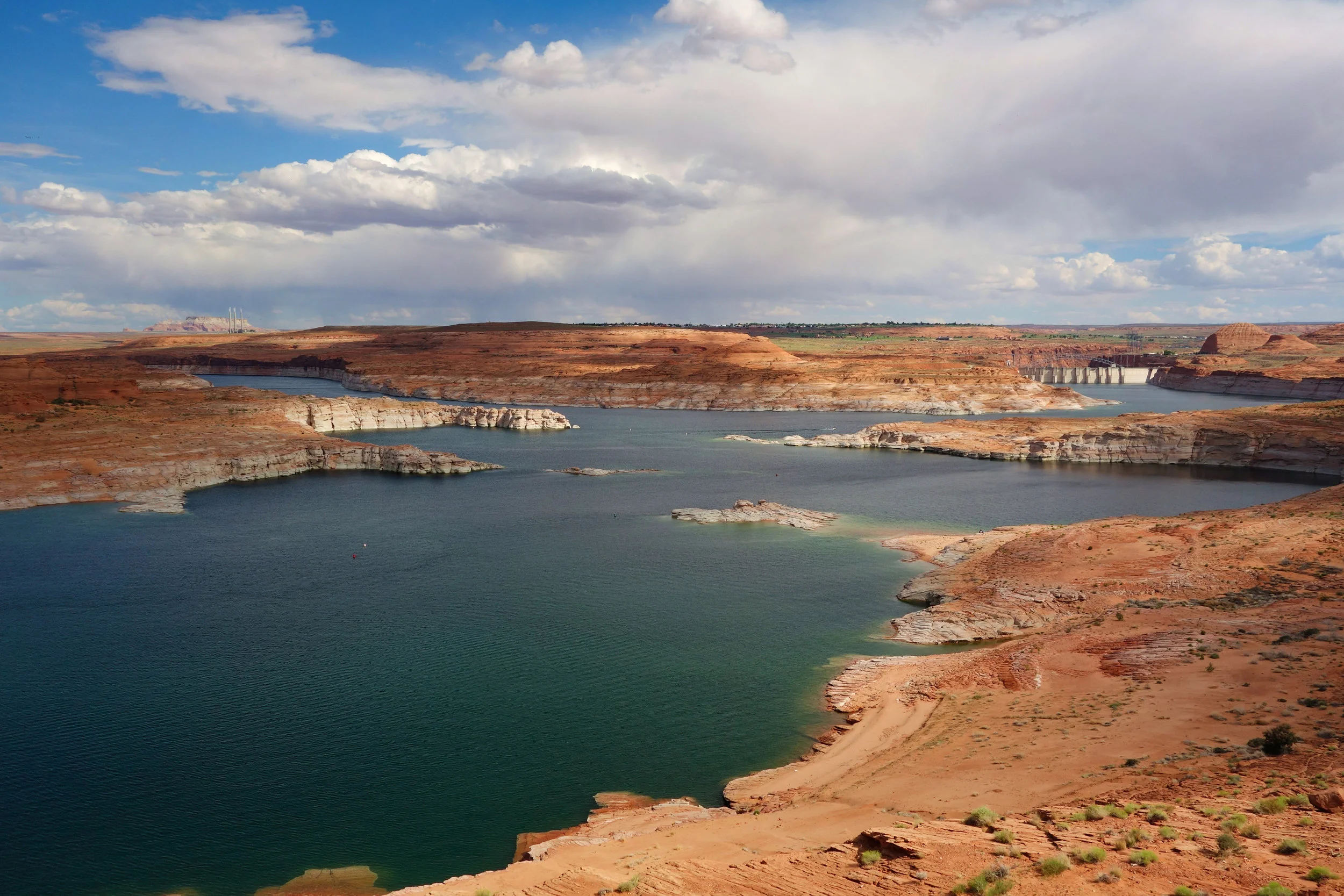
There is a tranquility in that place beyond words, where river and desert meet.
There is a tranquility in that place beyond words, where river and desert meet; time measured in the slide of golden sunlight over red-rock cliffs, in the glittering touch of starlight on the silt-laden green water at their feet, is something indescribably beyond the mechanized drone of the city. Here was the stillness, the quiet peace of the desert that Abbey spoke of. I rarely knew what day it was, and even more rarely knew the mechanical time; if the sun was up it was time for breakfast, if it was going down it was time to camp, and there were at least a few more nights between this wordless peace and my return to school. Each morning I would stand beside the water, toes pale with cold in my Chacos, and watch the Colorado meander wide and slow between startlingly vertical cliffs of varnish-streaked sandstone. I had stepped into the river of universal time, the realm of earth and water and sky, and left behind for these few days at least the artificial chains of ticking clocks and deadlines; in the cold spring air of the river canyon, battered fleece hat tugged low over my ears and my only pair of jeans slowly turning red with desert dust, I was free.
Eventually my return to the real world loomed, fierce and implacable, and I drove myself twelve hours of empty highways back to Bozeman. I had essays to write, rent to pay; for a while at least I would have to leave the Colorado behind. Eventually I wandered onto other rivers, to the Gallatin framed by tumbled boulders and ten thousand foot peaks and the Yellowstone with its wandering bison; but there remained something special about those days alone in the red-rock canyon of the Colorado, something different in the way desert and river had met beneath the clear spring sky. To this day I have no name for it, and I don’t think I ever will.
Sometimes I still cast my memories back to those days and nights on the river; to dawn on cool green water and sheer red rock, sunset over wind-carved towers, the rustle of bare oaks beside the bank and the shadows of ravens chasing their owners across the blaze of red-gold thrown back by the framing cliffs at sunset. What I found in the red-rock canyon of the Colorado was something different, unique, where sunlight and desert and river converged; something still with that deep quiet only the desert can hold, simple as the slide of sunlight over the canyon walls and complex beyond the capacity of humanity. Listening to the smooth ripples of green water over red rock, the muted susurrations of the current at dawn, I began to understand why Abbey called Utah’s canyon country “the most beautiful place on earth.” Words, though, will always fall short when trying to describe this feeling, this idea of "river time" that flows so differently from the tyranny of alarm and deadline. Colorado or Skykomish, desert or forest, time runs different with rivers, and those who run them are caught in the spell; it is just one of the river’s many gifts, a reminder that there is more to the world we live in than the constructed schedules of our city lives. Like all the gifts given by wild rivers, it is one I treasure with every float and whitewater run.
Read more:
Whitewater and Listening to Music
Tales From a Rookie: The Lochsa River via Mammoth River Tours
Sauk River Geology
A look into the geological formations that make up the North Cascades and the Sauk, Skagit, and Suiattle Rivers.
The peaks and valleys of the Cascades Range are carved from a complex geologic patchwork, with volcanic intrusions and massive sedimentary blocks pressed up against the range’s metamorphic spine on every side. The Sauk River, which drains Glacier Peak and the surrounding area, provides a perfect snapshot of this turbulent history.
Towering over 10,500 feet, the summit of Glacier Peak is the highest in the Sauk-Suiattle watershed. The combined watershed of these two rivers drains 96 glaciers. In the upper drainages traces of older alpine glaciers can be seen in deposits of glacial till--the haphazard piles of rocks left by retreating ice--and glacial outwash plains. Most of these deposits are about 20,000 years old. West of the river, the geologic footprint of a larger glacier can be seen; most of the lower valleys in this region are filled with sediment dropped by the Cordilleran Ice Sheet 15,000 years ago. The Cordilleran Ice Sheet was an enormous continental glacier that stretched from southern Alaska all the way through British Columbia to northwest Washington. The projected ice surface altitudes of this ice sheet suggest that nearly the entire crest of this part of the Cascades was covered in ice!
The section of Sauk River area rocks you’ll see from our rafts is a unit called the Darrington Phyllite, whose original source rocks were likely formed in the Jurassic period. These rocks have gone through multiple deformations that destroyed most of the original sedimentary structures; the original minerals were also replaced during metamorphosis. Keep an eye out for traces of the original sedimentary bedding (layers) in any boulders you find along the way!

The Cascade Mountains are rich with geologic finds all along the Sauk River.
Beneath these geologically young deposits the rocks of the Sauk River area are divided into two distinct halves by the Straight Creek Fault, which separates the western area of low-grade metamorphic rocks and the eastern area of medium- and high-grade metamorphic rocks. The eastern half of the Sauk River region contains three distinct “terranes”, or geologic regions bounded by faults: the Swakane terrane, the Chelan Mountains terrane, and the Nason terrane. The Swakane terrane is composed entirely of biotite gneiss, which probably started as sandstone before being subjected to enough heat and pressure for metamorphosis. Over the Swakane terrane lays part of the Chelan Mountains terrane, a rock unit called the Napeequa Schist. This unit is made up of quartzite, amphibolite and hornblende schists that were once part of an ocean floor. The last unit, the Nason terrane, is also former seafloor, likely from the Jurassic.
West of the Straight Creek Fault most of the rocks are also ocean-sourced, though they were metamorphosed at lower temperatures and pressures than those east of the fault. This area is cut by a series of tectonic faults known as the Darrington-Devils Mountain Fault Zone, complicating the local geology. A set of low-grade metamorphic rocks known as the Northwest Cascade System border this fault zone on one side, while on the other side of the fault system two mélange belts present a jumble of different rock types. Parts of these mélanges are sedimentary rocks instead of metamorphic, and contain a few different kinds of fossils; however, most of the fossils are very small and deformed, and were described by the USGS geologists mapping the area as “usually uninspiring”.
Any journey through the Sauk River region presents an intriguing slice of these mountains’ complicated geologic history, from the enormous glaciers of the recent past to the ancient ocean floor that now forms much of their rocky peaks. These rocks have been folded, buried and reformed, torn by tectonic faults, scraped clean and then covered in sediment by ice. Each one of them shows the traces of this past, in minerals and bedforms and tiny fossils; a story, ready and waiting for those who learn how to read it.
Geologic Definitions:
Metamorphic—a rock that has been changed from its original structure and composition through heat and pressure. Common examples include gneiss and schist.
Igneous—a rock of volcanic origin. Common examples: granite and basalt.
Sedimentary—a rock formed from compressed deposited sediments. Common examples include sandstone and shale.
Sources: GEOLOGIC MAP OF THE SAUK RIVER 30- BY 60-MINUTE QUADRANGLE, WASHINGTON By R.W. Tabor, D.B. Booth, J.A. Vance, and A.B. Ford, part of U.S. Geological Survey Geologic Investigation Series I-2592
Skagit WSR - Skagit Wild and Scenic Facts Mt. Baker-Snoqualmie National Forest - Resource Management, https://www.fs.usda.gov/detail/mbs/landmanagement/resourcemanagement/?cid=fsbdev7_001631 (accessed May 2017).
Read More:

Tales from a Rookie: The Lochsa River via Mammoth River Adventures
Triad River Tours Rookie Allie Kohr heads to the mountains of Idaho to train on the infamous Lochsa River with our industry friends at Mammoth River Adventures.
Tales from a Rookie: The Lochsa River
As a very green rookie guide, and I mean VERY… I haven’t seen much or done much on the river yet. I’ve had a bit of fun on the Sauk, Skagit, Green, but that’s about it. I’m still learning the ways of life in the guiding world and absorbing the culture, and it’s been a blast. I’ve met a lot of great people and learned a lot of lessons, been on a few rivers and been taught a few lessons. Rivers are special; they’re the embodiment of everything we fear, and everything we yearn for. And this has never been so clear to me than when I got the privilege of running the Lochsa.

I cannot say I’ve ever had this much fun on a river before; I didn’t want those 22 miles to end so quickly.
If you ever doubt your passion as a river guide, or are unsure where your heart lies, take a trip down this river and your questions will quickly be answered. The beauty, power and aura that this river presents are things that you will not soon forget. I had the great pleasure of running it with a young company called Mammoth River Adventures, led by Jesse Stone and Austin Wassmuth, and their awesome group of local guides and river people. Their welcoming attitudes and generous spirits were contagious and made the trip even better than it already was. They all knew I was a rookie, but treated me as one of their own and filled my head with loads of valuable information about the Lochsa, guiding, and professionalism. Every rapid, every leisurely float section, they all had great stories to tell or fun songs/poems to remember sections of water. We all took turns on the guide stick, smashed through some seriously fun water and laughed and hollered the whole way down. We were all smiles.
The river gods must’ve shined down on us that Saturday morning, because the sun was out, waters levels were essentially perfect, and everyone had a fun and safe day. For a first timer on the Lochsa, I fully expected a series of gnarly flips and mishaps to give me a proper welcome to this river. But, because of our skilled guides, and probably some luck, we had a clean run with no problems. The river seemed pleased to send us on our way rather harmlessly, but still throwing in enough thrill to get our adrenaline going and keep us focused on the task at hand. I cannot say I’ve ever had this much fun on a river before; I didn’t want those 22 miles to end so quickly. But of course, like all other good things, it must come to an end. I felt so lucky to have spent a day careening down that river with some incredible people, and ending it at the Mammoth HQ with those same people, sharing stories, laughs and beer. Those are memories that I will hold forever.
As far as the Lochsa, in my short time as a rookie, nothing compares. The brilliance of that river and all that surrounds it are enough to make you feel all nostalgic when you leave. A wise man and guide once told me, “If you come off that river and you don’t have tears in your eyes, you shouldn’t be a guide.” And boy, he was right. When it was time to venture back to Washington and all my responsibilities, the sheer magnitude of that experience hit me. It was an almost spiritual experience that hit me deep and truly solidified my passions. The Lochsa is truly magical. My heart is on the river, and it’s never coming back.
Allie Kohr
Read more:

The Utility of Fear in Whitewater River Running
Whitewater River Running and the relationship that risk has with our quality of life

While Whitewater Rafting has a reputation for cheap beer drinking, smelly guides, and loose unadaulterated fun, there is a more subtle, more personal reason why many people seek out winding waters of our pacific northwest rivers; the peaceful serenity of being in the flow.
The Guiding Profession; full of weirdos
Whitewater River Guides are their own breed, they live by their own code, seeming to understand each other while the public presses on, keeping up with technology and the changing times. River guides seem to live in an endless moment that either cares not for the things of the world, or is directly rejecting them. Guiding whitewater is one of the few occupations where you are actually encouraged by your employer to lose your focus of time, and simply be present with the people who are joining you.
In the early days of river running the Grand Canyon was set center stage (well, it still is) in the industry. Large wooden dories and huge powered inflatable crafts would charge down this magnificent river. The people that often controlled these trips were a different breed altogether than even the people of their time. There were absolutely no cell or satellite phones for them to call for help. In those days, if you started a river trip, you were completely and unavoidably committed.
Exposure

Today we almost always have a way out of the river corridor, either through some pre-planned evacuation route which will take us to the nearest road, or by using a cell phone or (on multi-day expeditions) satellite phone to call in the authority of the medi-vac helicopter. Technology seems to have provided for us a decent buffer from the elements, and from the worry of what we call overexposure.
The classic alpinist, and first man to ever climb Mount Everest solo and without oxygen, Reinhold Messner, talked candidly about ethics of river running, and used the term exposure. Messner used the term in not exactly the same way as medical professionals would use it; to explain the exposure to the elements. Rather, Messner described exposure as a conglomerate of feared aspects of your ascent or route. If you were highly exposed, you were, in essence, more vulnerable as a human being, and Messner was keen on explaining the reason for why he climbed; it wasn’t about accomplishment or triumph, it was about overcoming something obscure, something that we otherwise don’t have a platform to discover. It almost seemed that by adding exposure to our lives we were able to reach in and communicate with a deeper part of ourselves.
The Value of Fear
These days we see the world in a paradox of social personalities. Either people are completely dedicated to keeping themselves safe (the majority), or they are exhibitionists, adrenaline junkies, if you will, who want nothing more than to scare themselves nearly to death by doing something that seems too extreme to be reasonable. Why people do these things is a study for another blog or debate, but nonetheless we can see industries develop around these two extremes; our industry, quite obviously, is centered more around the latter, while quietly being catered to the former.
Fear is, essentially, nervous discomfort. In our line of work it’s typically a psychological sense of moving in a way that is convergent with their own survival. There is a certain nonsensicalness involved in such actions. When someone is travelling down a river filled with water barely above freezing, surrounded by people they don’t know, doing a sport that they learned in a video and a 30 minute safety talk, there is almost undoubtedly some aspect of the mind that rejects the entire scene and experience. Fear is a natural reaction to getting closer to something that you believe could kill you. There’s a place for fear in our lives, and it’s unavoidable. Sometimes, it seems, whitewater is used as a medium for people to overcome their fear, because through the sport you have an opportunity to deal with it directly, and because you are in a raft going down a river… essentially you do not have the ability to stop the adventure once it starts, you are literally along for the ride. There’s just absolutely no doubt that people overcome fear while on the river. The question that must be probed deeper is; why would people want to overcome fear in the first place, if it is fear that is keeping them “safe”. The answer has to be a more spiritual one.
Fear seems to have a counter influence in our lives aside from keeping us safe. Fear can dominate our lives, it can imprison us in our otherwise free existence. Fear can become irrational when we live in a way that does not challenge us, or in a way which remains so repetitive to become somewhat emotionally stagnant or disattached from the passions of our otherwise wild hearts. Whitewater offers us a chance to explore fear, to analyze it, to understand it in a vacuum of sorts, where very little else is going on other than fear. It presents us an opportunity to grow as people.
Fear may not be a part of every experience for everyone that goes on the river, but it’s a part of whitewater rafting for a lot of people. Fear connects us to our own vitality; a very simple reminder that we are alive, and want to be. There is tremendous value in that. While thousands of people will flock to our website, then to our rafts, and occasionally into the river, we see an evolution of individual people… a positive and personal evolution. We see people show up, sick of their lives at their jobs, or in the city doing whatever they are doing… and then we see them leave, almost glowing, knowing that they went somewhere with complete strangers, into a place where others have perished, and they came out alive. Sometimes we just need a reminder; a subtle nudge that snaps us back into the reality where we are living a life of consequence and meaning, and it is up to us to discover that meaning. The river is nothing more than a catalyst. It is a provider of opportunities to facilitate these small but necessary transformations.

Guides like Brandon Steele see their jobs as a service to the public not merely to protect and keep people safe from fear and danger, but to allow people to have their own personal experiences with it, while unavoidably acknowledging its presence while on the river.

Snoqualmie River Introduction
Closest Whitewater to Seattle
Snoqualmie River: Closest Whitewater to Seattle
For the past few years we’ve heard stories about this “classic” Western Washington whitewater run that’s only 30 minutes from Seattle. At the behest of Blake, one of our lead guides, we took an official scouting run on it this year and worked up the preliminary safety protocol. We had plenty of beta (information gathered from other river runners) and video, as well as several trial runs by lead guides at Triad. The only thing missing were actual customers and a system to run it.
About the Snoqualmie ("the Sno") River

This picture accurately represents what you can expect from the geology of the river corridor; a river cut through by ancient glaciers that formed near the Seattle area. These glaciers cut their way through mountains that form the rather large river valley of the Snoqualmie River, leaving behind several large-ish boulders, curves and turns in the river; all that is needed for excellent whitewater paddling.
The Snoqualmie is similar to our Sauk River run in terms of whitewater. Large-ish boulders, cold, clean, glacially fed water, somewhat technical maneuvering required amongst mainly class 2 and 3 whitewater drops… and one rapid more difficult and dangerous than the rest. It is a mimic of the Sauk in a lot of ways, but what sets it apart is it’s proximity to Seattle.
The Snoqualmie sits near North Bend Washington, near the Snoqualmie River Casino, just past Issaquah on Interstate 90. Anyone that drives Snoqualmie Pass, skis or snowboards at Snoqualmie Pass, or drives to the Eastern side of the state via that route, has driven literally right past it. The river run actually ends less than a mile from Interstate 90. This is an excuisitely unique feature compared to our other rivers, and is a sight to behold. One minute, literally, we were in Seattle, downtown, getting a tea, and then a few minutes later we’re taking the I90 exit after a brief stint on South I5, and then after a fairly traffic free 30 minute ride, we’re looking at the transluscent green water of the Snoqualmie. This river offers something that other rivers don’t; proximity to the city.
Seasonality and Conditions

This picture is from the "upper" section of river on the Snoqualmie, in the Forest Service district above our whitewater section. The guides enjoyed the slow cruise and scenery, but looked ahead to see what the river had to offer in terms of excitement.
The Snoqualmie has an earlier season than some of our other rivers, with a typical April-June runnable chunk of time. This corresponds nicely to the Skykomish, which opens for us usually in June or July (the Skykomish is a larger river with a later runnable season). So we will be running trips on the Snoqualmie from April-June, prior to our trips on the Skykomish.
There are a few things to consider when choosing this trip instead of others. The first is that it’s a 7 mile trip (our normal length of a river section, and what we consider to be a prime 3-4 hour trip in total with a 2 hour river run), with launch times in morning, mid day, and late afternoon. Secondly, because it’s primarily class 3 whitewater it may be suitable for beginners who are in good physical condition, or kids that are adventurous and willing, as long as the river isn’t too high at the time.
Because of it’s early season and natural origin being snow melt in the mountains, the river is going to be cold any time you are going to run it; this is a mandatory wetsuit run. If you don’t have your own wetsuit we always have them for rent, but remember that the river is going to be cold, and make sure to prepare yourself with a wetsuit. Also note that the run has some good whitewater, but it’s not the adrenaline rush of running Boulder Drop in the Skykomish. Look at this run as an opportunity to get on the river simply, without too much hassle, as a way to bring your friends or less experienced people with you before you run the Skykomish later in the season, or use it as a run to get your proverbial feet wet at the start of your whitewater season. While the Snoqualmie has legitimate whitewater, it’s still a mountain stream style of trip, without the jaw dropping, fear inspiring whitewater we see on the Skykomish. Choose your adventure wisely.
Read More:
Skykomish River Whitewater Rafting

Patagonia Makes Political Statement
Patagonia makes a big political statement by taking a stand for public lands.
Click here for relevant article
After I became a guide in 2000, I started traveling to rivers all over the country. Usually I would work summers, sleeping in a bivy sack on the beach during multi-day expeditions, and in the winter I would rent a room somewhere while doing drift boat fishing trips. After working rivers on the East Coast in 2003 I got a job at a Patagonia store in Bar Harbor, Maine. Ever since then I worked at that store I have used their gear, but it's not because of the quality of their clothing, it's mostly because of what they stand for.
When I worked at a Patagonia store we were trained to ask people "do you have something that already serves this purpose?" to make sure that we weren't just selling something because it was cute; we wanted it to serve a purpose. I can remember talking with the Patagonia factory employees on the phone. You could tell that they were happy where they worked, and you knew that they backed up their products not only because it was good business, but because the company sincerely wanted to produce less waste. Since I worked at a Patagonia store I don't think I have ever been on a river trip since then where a piece of Patagonia gear hasn't been with me. It's expensive, that's for sure, but I always feel good buying it. I have pieces of Patagonia gear that I have sent in for repairs 3 or 4 times. They always fix it and send it back, or they'll send me a gift card to buy something else. Now that I'm finishing my masters degree in business, focusing on sustainability in the outdoor recreation industry, I can't help but think that Patagonia is the company that sets the standard for minimalist ethics in a consumer industry.
Now that we live in politically charged times, we as guides have to be careful to be open to everyone. We are public servants, here to expose and introduce people to their natural landscapes, their public lands, and the wonders that surround them in Washington. It's not our job as guides to change the minds of people, it's our job to listen to them, what their values are, and how we can facilitate their relationship with mother nature. We have to work alongside several government agencies, and its not always perfect, but we appreciate that these agencies are there to protect public land, and (hopefully) they are there to empower our company to serve the public on those lands (and rivers). Now we see Patagonia as a company taking a stand for public lands, identifying their company as a proponent of protecting public land even at the expense of profits. While we are politically neutral as a company, we respect Patagonia for the statement that it is making: that business shouldn't come at the expense of our core ethics and beliefs.
Luke Baugh
River Manager at Triad
Read More:
The Unquantifiable Value of Rivers
The Rise of the Ethical Expedition
Sauk River Wood Danger
Insight into the location of recent log deposits on the Sauk River that poses a threat to whitewater rafters in the area.
Guides spotted 3 logs in a dangerous spot on the Sauk River on January 28th. The logs are positioned at the bottom right of the rapid called Jaws; they are not a serious safety issue right now for us (we ran it close to our lower bound cutoff to just do drills) but in higher water boats taking the standard right run could be pushed into it.
The trees cover about 3/4 of the river right now, extending from the right bank out into the flat pool (about 150 feet of slack water after jaws) after the big “demon seed” rock…
Darkness got to the training run before they could go back up to develop a strategy for avoiding it, but we will look at it more closely next time we are up there and report back.
At this time we are not sure if high water will wash them out or not. They clearly fell from the high cut bank that exists below Jaws on the right.
The map above is of the Sauk; Jaws is in the center of the map.
February 2017 Snowpack report
River level conditions look favorable due to an impressive winter of above average snowfall.

2016 Whitewater Snow Pack Report (Updated May 12, 2016)
River conditions in 2016 are better than the previous year, but rafting is still considered low water on the Sauk and Skykomish.

Snowpack report for whitewater rafting in Washington during 2016 season
We have seen some changes to the river flows, and the general consensus is that we're in for a short whitewater season (so book your trips early). The Sauk has went from around 4,500 cubic feet of water per second, to about 2,200 in a matter of 2 days. What it seems is that the snow is at higher elevations and thus requires extremely high temperatures in order to have a melt which has an effect on the river flows. This is a good and bad thing for us because on the positive side it's going to extend our season; on the negative side it makes things a little more unpredictable and potentially we will have a long season of water that is slightly too low to run (god forbid!).

The diagrams to the left are snapshots of the hydrographs at the time of this writing (Thursday May 12), they show the Sauk and Skykomish river systems, both of which are mostly related to the snowpack report of the "Puget Sound" region. The Sauk has a little bit of influence from the Northern region, which has more snow. The river level hydrographs from this week clearly show a definite relationship, nearly 1 to 1, regarding air temperature and water flow; although neither river really got as high was we would expect with temperatures that hot.

You can see the average river levels by the small yellow triangles. You would think with the hot temperatures that we'd be seeing very high levels, but with less snowpack, and (theoretically) that snowpack being concentrated at higher elevations, it's common for that hot weather to just bump us a little. Either way the rivers are all clear and running; no trees, and we are good to go. Got new brakes on one of our buses, and two new rafts, so we're all stoked. We look forward to hosting you great folks on the river. The Sauk and Skykomish look to be good bets for the next couple months; SO HIT THEM UP!
2016 Whitewater Snowpack Analysis
A look at current snowpack conditions in the North Cascades and how it will change the river flows for rafting on the Skagit, Sauk, and Skykomish Rivers.

Our summer rafting season is almost here and we've been monitoring the rivers and snow pack closely. After a drought last year we are cautious to plan out our summer too early.
At this time we are expecting to have a good season on the Sauk river in June, with some technical lower water in July. We anticipate having a great season on the Skagit River in August and September. The Skykomish had some high water this past month of April, and we expect it to have a solid season through June and hopefully well into July.